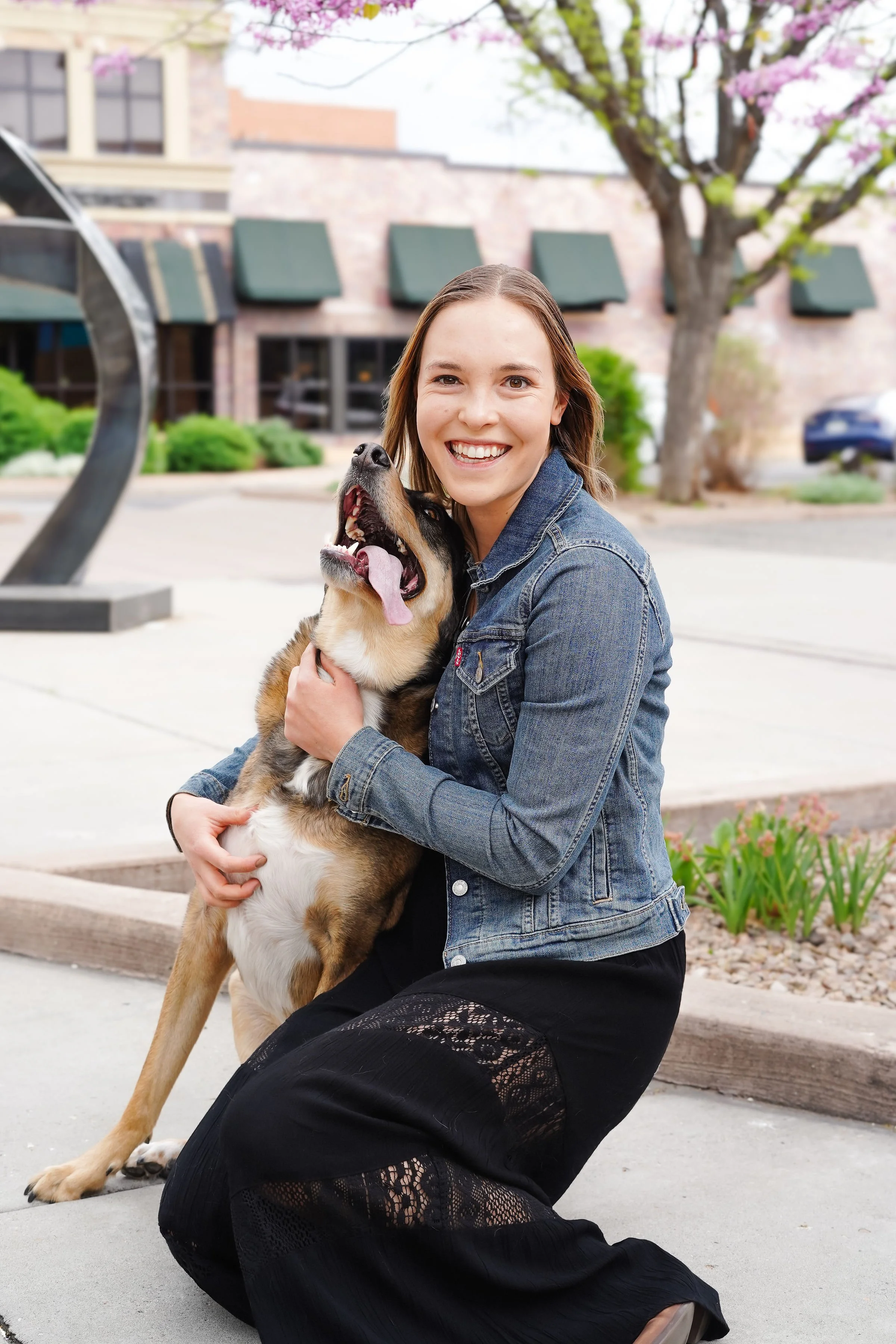
Aurora O’ Connor, LSW
Specialty: Neurodivergence & Sensory Differences | Trauma | Anxiety | Emotional Regulation | Identity Development | Life Transitions
Therapies: EMDR | Trauma-Informed Therapy | Nervous-System & Somatic Approaches | Attachment-Based Therapy | Developmental & Strengths-Based Therapy | Polyvagal-Informed Therapy | Animal-Assisted Therapy
Ages: 12+ (younger on case-by-case)
Accepts Medicaid, United Healthcare, Rocky Mountain Health Plans, UMR
Out-of-Pocket: $150
A Therapist and Her Dog…
I am a Licensed Social Worker (LSW) currently completing my clinical hours toward licensure as a Licensed Clinical Social Worker (LCSW). I earned both my Bachelor of Social Work and Master of Social Work degrees from Colorado Mesa University and bring a strong background in healthcare and integrated care settings to my clinical work.
Outside of therapy, I’m usually somewhere outside with my dogs, Blue and Daisy, exploring the Western Slope. I also believe therapy does not always have to look like sitting across from someone in a chair and talking for 50 minutes. When appropriate, I enjoy incorporating movement, sensory experiences, and animal-assisted interventions into therapy.
For clients who connect with animals, Blue can sometimes offer another way to slow down, regulate, connect, or simply feel a little more comfortable being in the room. His involvement is always based on the client’s comfort, needs, and treatment goals.
Clients I Work With
I primarily work with adolescents and young adults ages 12–25 who are navigating anxiety, trauma, sensory differences, identity development, life transitions, and relationship challenges. The teens and young adults I work with often feel like everyone else received a manual for how to be a person—and somehow they missed it.
They may know they are overwhelmed, anxious, angry, exhausted, or shutting down, but have a hard time explaining why. They may hear that they are too sensitive, too emotional, defiant, unmotivated, or difficult when what is happening underneath is much more complicated. Sometimes their nervous system is simply overloaded. Sometimes they are carrying experiences they have never had the words to explain. Sometimes they have spent years trying to meet expectations that were never designed with them in mind.
Many of the young people I work with are trying to understand themselves while also trying to figure out who everyone else expects them to be. They may struggle with friendships, conflict at home, school, sensory overwhelm, emotional regulation, or communicating what they need. Others are navigating ADHD, autism, developmental differences, trauma, anxiety, or major transitions into greater independence.
It can be exhausting to feel like you are constantly being told what you need to change without anyone stopping to ask what is actually happening.
My Approach Therapy
I don’t believe therapy should be about making someone appear “less difficult” or forcing them to fit more comfortably into a world that may not always understand them. Instead, I work with clients to better understand themselves—their emotions, nervous systems, needs, patterns, experiences, and strengths.
My hope is that therapy can become a place where clients do not have to spend their time proving that their experiences are real. We can start by understanding what is happening, build from there, and work toward whatever feeling more connected, confident, regulated, and authentically themselves looks like for them.
Therapy with me is collaborative, relational, and practical. I don’t believe there is one right way to do therapy, particularly when working with adolescents and young adults. Therapy may look different from week to week depending on what the client needs.
Sometimes we may spend a session talking through what happened during the week. Other times, we may use movement, grounding, sensory strategies, creative activities, or nervous-system education. When appropriate, we may use EMDR to work through experiences that continue to feel emotionally or physically present.
I tend to look beneath the behavior to understand what is driving it. Through a trauma-informed and nervous-system-focused lens, we may explore how past experiences, relationships, sensory experiences, emotions, and stress responses are influencing what is happening today.
My work draws from EMDR, attachment-based, strengths-based, developmental, somatic, and polyvagal-informed approaches. I don’t use every approach with every client. Instead, I adapt therapy to the individual in front of me, taking into account their age, developmental stage, goals, communication style, strengths, and what feels safe and useful.